 Welcome to Torrey Pines Gulls
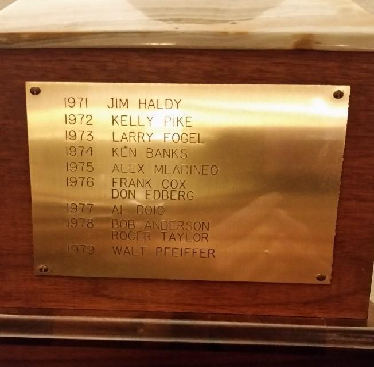
Bob Anderson – Co-Modeler of the Year - 1978
Robert “Bob” Anderson was born in Cherry Point, North Carolina in 1947 into a US Army family. His father was stationed in various places until 1961 when they settled in San Diego. Bob always expressed an interest in aviation and secured his pilot’s license at age 19. He received a bachelor’s degree in graphic arts from San Diego State University and soon thereafter helped establish a company that worked for Boeing as a contractor to develop the artwork for the manuals for the B767 and many other Boeing designs. These were not small catalogs but required generating 2,500 pages of art every month with 500 people in the company drafting all of the artwork. (Ah those “pre-Photoshop” days). Bob learned a lot about aircraft through those projects…every rivet and screw of many Boeing aircraft.
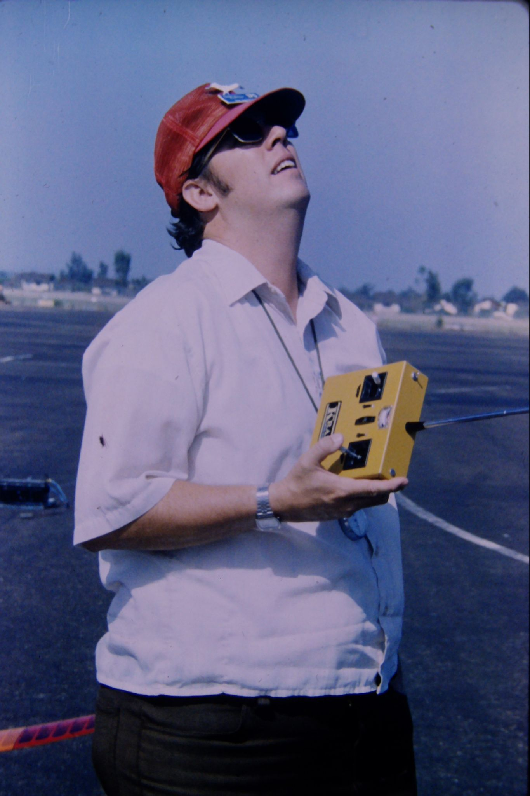
Sometime in the 1970s Bob’s brother gave him a Guillows free-flight model airplane kit. It wasn’t designed for RC but Bob built it to include RC. His first radio was a Kraft 1976 series transmitter. In June 1977, He heard about the group of modelers flying RC gliders at Torrey Pines and decided to check it out. He was hooked quickly and people in the club helped him learn to fly. Bob’s first mentor was Ken Banks, and Bob would show up during the week at Torrey and fly – on many of those days he was the only one flying anything at all over the cliffs. It was magical. Other modelers provided lots of assistance and encouragement for Bob at Torrey including Steve Neu, Steve Manganelli, Roger Taylor, and Al Bendett. Bob purchased a second plane, a Mark’s Models Windfree. But for whatever reason he found the Windfree to be exceedingly difficult to fly. He purchased a Mark’s Models Wanderer instead and that was the ticket.
The TPG held monthly slope races at Torrey in the 1970s, mainly with “profile” gliders that were u-control kits converted to RC. Most of these were of World War II designs, such as a P-51 Mustang or P-39 Airacobra. Bob purchased a P-51 kit and built it, coloring it white with red checker striping like a racer car would have. It looked great. But it also reminded some in the club of the red checker Purina cat chow logo. Thus, the glider was nicknamed “Purina Pursuit”. Bob became very adept at aerobatics with his P-51, doing repeated loops and rolls in the bowl. Very fun. Exceptional training. And this led to exceptional skills.
It didn’t take long for Bob to realize that the TPG also has a group of people using RC sailplanes for thermal soaring. He became intrigued and rapidly became an active monthly contestant. He placed 11th overall in his first year. He enjoyed flying the popular Airtronics Aquila with a Skip Miller modification for the airfoil for standard TD, and flew an Airtronics Olympic 650 in the then-burgeoning 2-meter class. After the Oly 650, he began to scratch-build his own 2m and open class aircraft.
For his rather meteoric rise from new pilot in mid-1977 to several first places at contests in both slope and thermal, and for being an all-around wonderful guy for the club, the Gulls honored him in 1978 with the Modeler of the Year Trophy, shared that year with Roger Taylor. Bob Anderson responded by volunteering to be club president in 1979.
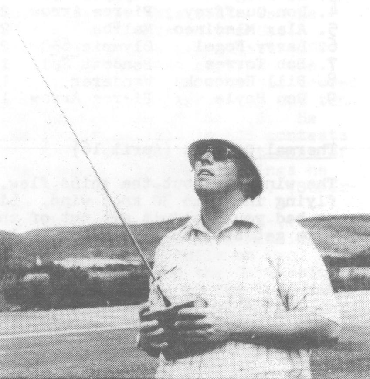
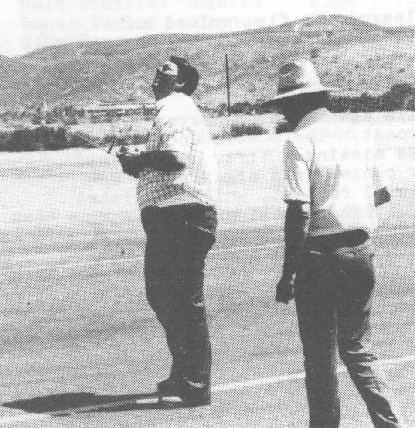
In the 1980s the TPG went through a period of political in-fighting and rather than take part in all of that, Bob began flying more with the Thermal Pilots Association, an RC soaring club that flew in San Marcos and also in South Bay. Over time as electric RC aircraft were on the rise, Bob became interested and joined the Silent Electric Flyers of San Diego. His interests in RC continued and he got into RC helicopters for a time, passing along his interest in RC to his son-in-law. Bob appreciates being remembered by TPG as one of the two 1978 Modelers of the Year and still thinks of those golden days at Torrey with fond remembrance.