 Welcome to Torrey Pines Gulls
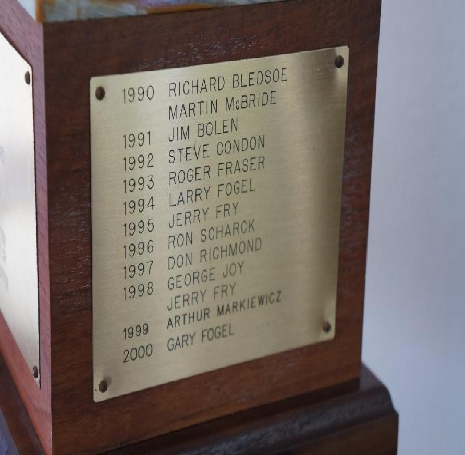
Gary Fogel – Modeler of the Year – 2000
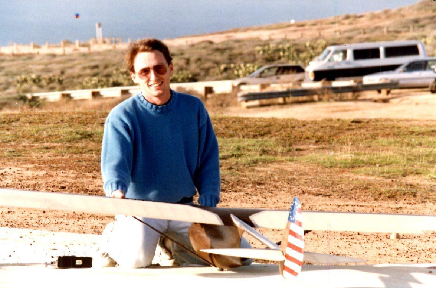
A native La Jollan, Gary started flying free flight gliders at about age 3. He didn’t really have much choice in the matter, as his parents, Larry and Eva and older brother David were more than a little bit supportive. Larry had helped the TPG get started in the early 1970s, and both David and Gary considered the Gliderport as their playground. Doesn’t everyone’s playground come equipped with a 300-foot cliff, beautiful view, and model airplanes?
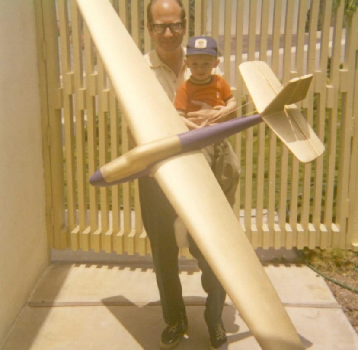
In the early to mid-1970s Gary would fly free flight gliders off the cliffs at Torrey, experimenting with different designs; building them with his dad and then trying them out the following weekend. Some were very small (~4-inch wingspan); and some quite large (~6-foot wingspan). Most of these were trimmed so as to either hover into the prevailing wind or make giant arcs out over the cliff edge, climb in the lift and then complete a 360-degree circle without landing in the golf course. Most of the time it worked out okay.
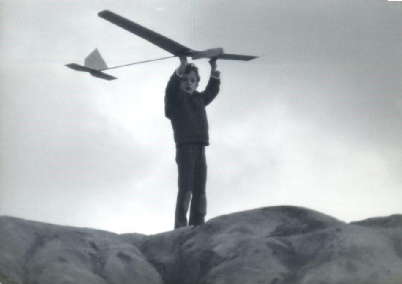
Gary graduated to RC in 1977 and made his first solo at Torrey at age 9 on an Ed Slobod designed polyhedral Pierce Arrow, a great trainer. However, during one lesson about not stalling while on a downwind approach, Gary of course stalled, and the glider was immediately re-kitted in truly spectacular fashion in the backfield. The next sailplane was a 2 channel Avatar, which survived long enough for Gary to really learn on. From there, he moved up to ever more complex gliders; a Gryphon flying wing; a Graupner Cumulus, until eventually finding a considerable interest with scale RC sailplanes. Like many TPGers, his first experience with scale RC sailplanes was with Larry’s ¼ scale Kestrel-17, a very large plane for the time with a top-of-the-line 7 channel Kraft system. A successful landing left Gary with wobbly knees and left his dad Larry very proud.
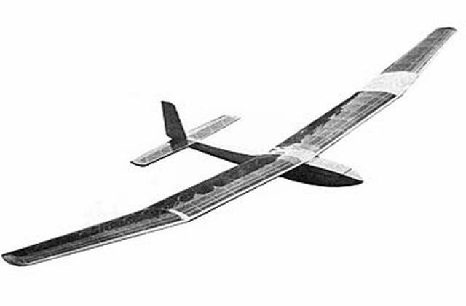
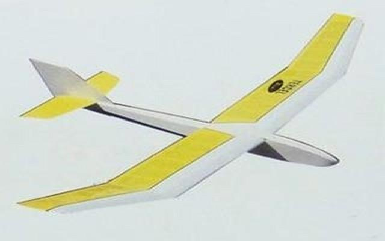
Larry and Gary were mainstays with the TPG. Larry was heavily involved with club operations, while Gary enjoyed flying mainly at the slope. Later, Gary developed an interest in thermaling, and from there, hand launch gliders, his favorite being the Bridi Tercel. Gary built and modified many of those while attending La Jolla High School in the 1980s.
During the summer of 1984, Larry, Eva, Gary, and Angelo Orona went for a 2 week soaring safari to Europe, flying RC sailplanes at many locations including Kircheim Teck in Germany and Hahnenmoospass high in the Swiss Alps. They also enjoyed stopping at just about every model shop they could find. With the US Dollar worth about four German Marks, they purchased many scale sailplanes, planes which eventually found their way to other TPGers.
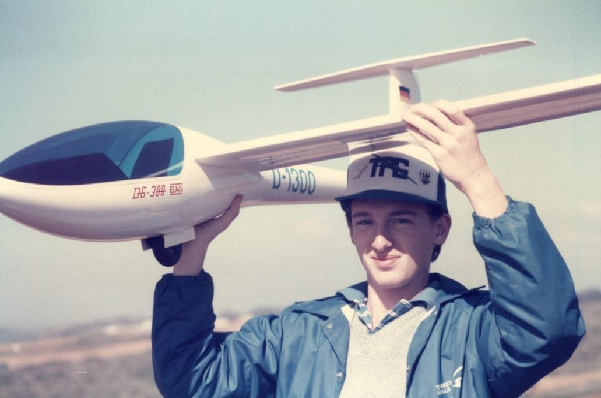
Soon Gary left San Diego to attend UC Santa Cruz with an interest in paleobiology. He took several gliders with him and enjoyed flying RC on the slopes in northern California. He graduated with his Bachelor’s degree in biology with a minor in earth sciences in 1991, starting his Ph.D. program in biology at UC Los Angeles that same summer. Once again, he had an apartment closet full of RC sailplanes and flew at various locations in the Los Angeles area. All the while, he remained a TPG member and would join in at TPG events whenever he was in San Diego. He also joined the Torrey Pines Scale Soaring Society as that club formed with interest solely around RC scale soaring.
.
\
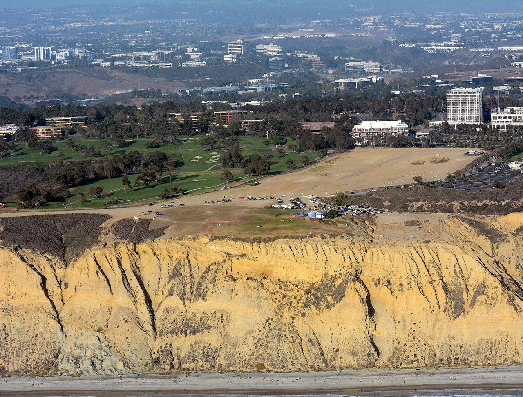
The Torrey Pines Gliderport has many complexities, the first of which is property ownership. The cliff-side portion of the Gliderport is known at Torrey Pines City Park and operated by the City of San Diego. The inland portion of the Gliderport, used for full-scale sailplane operations is owned by the Regents of the University of California and operated as a part of UC San Diego. This division did not always exist. In the late 1950s/early 1960s, the citizens of San Diego deeded property to the University of California in order to attract them to build a campus in La Jolla. Citizens who voted for this had no idea that they were deeding half of the Gliderport to the Regents. In the description of the measure, the property was listed as Pueblo Lot 1324, etc. Despite pleas from the Associated Glider Clubs of Southern California not to include the Gliderport as a part of this transfer, San Diegans voted in favor of the measure, creating the property divide. At the time, UC San Diego Chancellor Revelle felt that it would be possible to continue manned glider operations at Torrey Pines, seeing particular educational and scientific benefits for a campus associated with a gliderport. In the 1970s, the campus even had its own UCSD Glider Club operating manned Schweizer sailplanes alongside the AGCSC at Torrey Pines.
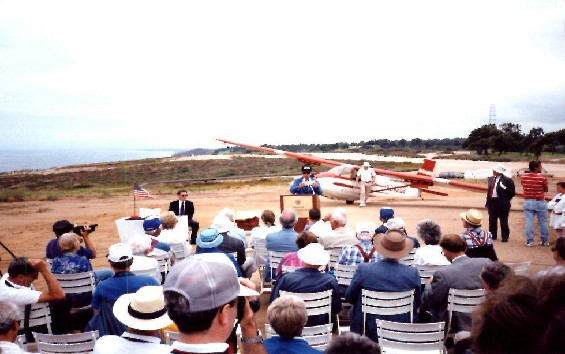
However, in 1989 UCSD produced a long-range development plan (LRDP) which listed half of the UCSD owned gliderport property as “academic reserve,” a fancy term for “future academic high-rise buildings.” Upon seeing this while at UC Santa Cruz, Gary alerted his father Larry, and together they began to formulate a plan to determine how to change the LRDP view. Gary wrote a letter to the National Soaring Museum (NSM) suggesting that the Torrey Pines Gliderport should be considered as a National Soaring Landmark (NSL). At the time, the NSM had honored six sites in the US as National Soaring Landmarks but none west of the Mississippi. The process of proposing a NSL was complex, and required an application with documentation of the location’s history. Gary set forth to research this history, while Larry set forth making arrangements for the ceremony. Fortunately the application was eventually accepted, and in 1991 a large dedication of the National Soaring Landmark was held at the cliff, and included many of the site’s earliest pioneers such as Woody Brown, John Robinson, Paul MacCready, Bill Ivans, Helen Dick, and many others. This designation however was only honorific. If the UC Regents still wanted to build on the Gliderport, they could do so. But with all of the favorable press in the papers, a clear signal was sent that many people considered the Gliderport sacred ground.
While Gary continued to research the history further, Larry began to campaign with the City of San Diego to get the site formally recognized as a city historic site. This required another round of letters, another application to convince the Historic Resources Board of the site’ importance to San Diego, etc. At the same time, Gary started his Ph.D. coursework at UCLA. It was an exceptionally busy time. This left Larry largely in command of trying to engage directly with the city while Gary focused on historical documentation, making use of UCLA’s considerably amazing libraries. At the City hearings UCSD objected as the City of San Diego had no jurisdiction over UC property. As a result, the City of San Diego approved the site as being historic, but only the portion owned by the City of San Diego. It is unfortunate that it wasn’t recognized as a City Historic Site before the property could be deeded to the UC Regents; the gliderport today would be a very different place.
For the Fogels, this wasn’t good enough. Larry Fogel mounted another campaign to go to the State Historic Commission and get the entire site listed on the California Register of Historic Places. This required yet another nomination, and this time the documentation had to be even more detailed; and include rationale as to why the site was important to the entire state. Gary connected with, and interviewed many of the original glider pioneers, and used this together with assistance by members of the Save Our Heritage Organisation to craft a winning nomination. Larry took this to a critical meeting at Riverside where the fate of the proposal would be determined. There, despite many objections by UC San Diego administrators, the proposal was approved. Finally, the entire Gliderport was recognized as historic by a body at the same level as the UC Regents. Yet, it was learned that even this couldn’t preclude the UC from building on the property. California has a coastal law and organization that restricts the height of buildings near the coastline (the California Coastal Commission). The Coastal Commission enforces these restrictions on all property owners within 3 miles of the coast, except in the case of the UC, where the UC Regents get to approve their own buildings and heights on their property within 3 miles of the coast.
Applications that are approved at the state level of historic significance are then considered for inclusion on the National Register of Historic Places automatically. Gary and Larry were sure to document not only the importance of the Gliderport to the state, but to the nation’s gliding history in the original application. Once again, despite UC objection, the Keeper of the Register found that the site was historically important to the nation, and it was added to the National Register, the first Gliderport in the US to have this distinction.
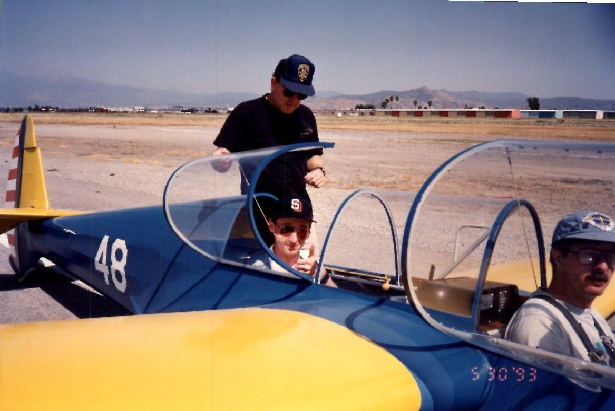
All of this occurred between 1990 and 1993 and left the Fogel family quite tired, but also left Gary with a large amount of historical information about the Gliderport and gliding history in general. He became very interested in the early history of gliding in San Diego; not just of the Torrey Pines Gliderport but of activities regionally. He continued to interview pioneering glider pilots, became a member of the National Soaring Museum, Soaring Society of America, and Vintage Sailplane Association. He established a short-lived new AMA club called the Vintage RC Sailplane Association and then co-established the International Scale Soaring Association to help promote the importance of preserving soaring history through scale model sailplanes.
In 1995 he set his first RC record; a Class A (60” wingspan) declared distance record by launching at the north end of the cliffs at Torrey Pines and walking all the way to the Scripps Pier, flying his Tercel from the beach with a team of witnesses following him. That same year he married his wife Joanne and three years later he completed his Ph.D. and moved to San Diego to take a position at his father’s company Natural Selection, Inc., applying machine learning to biomedical problems where he remains as CEO.
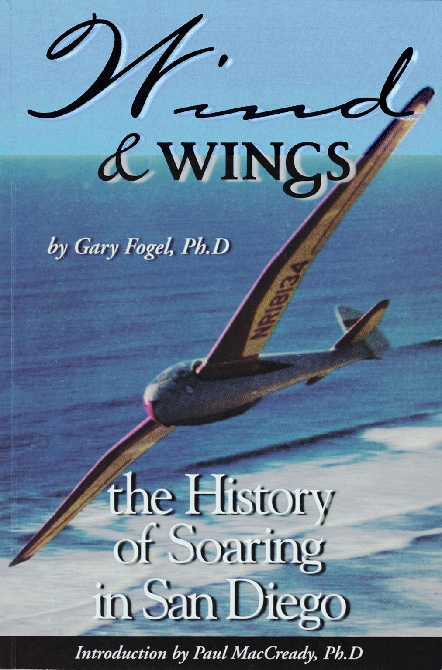
In 1999, Gary pulled together a rough timeline of the region’s gliding history and published this as Wind and Wings; The History of Soaring in San Diego. The book was reprinted again in 2000. Not meant to be a prize winner, this book was merely a compilation of all of the facts that Gary was able to obtain about the region’s history as was required for the various historical designations. Despite that, it did win a book of the year award; the Joseph C. Lincoln Award from the Soaring Society of America in 2000. In light of this accomplishment, the TPG also honored Gary with the Modeler of the Year Award for his service in helping to preserve the Gliderport for all forms of motorless flight.
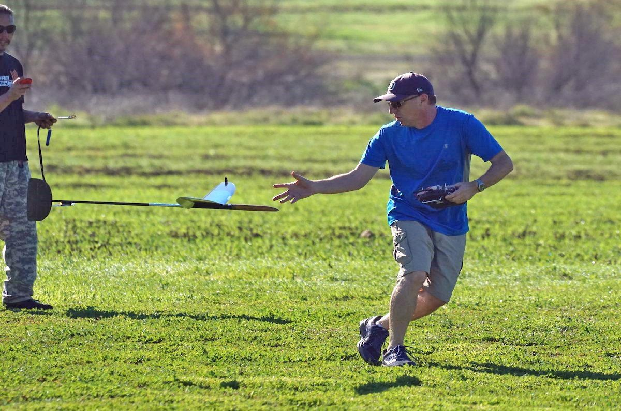
Gary continues to fly RC gliders, focused mainly on discus launch gliding and record setting and he has served as TPG’s historian since 1991. He has also published biographies of early glider pioneer John J. Montgomery and early ballooning/parachuting pioneer Park Van Tassel. Gary also teaches a course, “Introduction to Aerospace Engineering” at San Diego State University each Fall. He is an IEEE Fellow, AIAA Associate Fellow and Fellow of the AMA. As for the Gliderport, it’s still very much under threat of development, however that development would also have to preserve its historic use for gliding. There is always work to be done to ensure that the public understands the importance of this unique resource for motorless flight.