 Welcome to Torrey Pines Gulls
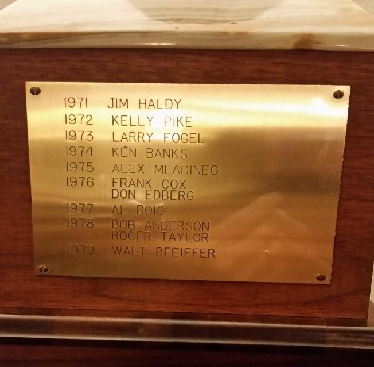
Kelly Pike - Modeler of the Year - 1972
Kelly Pike grew up in La Jolla, attending Muirlands Junior-High and La Jolla High School. His father Jim, worked at Convair in San Diego, helping with aircraft design and development such as on the Convair XFY Pogo. Jim’s engineering background naturally led to a “learn by doing” method of parenting, and both Kelly and his brothers were tasked with choosing a hobby that they could get into as father and son. Kelly chose to build an RC model sailplane. A kit was purchased at the local model shop, and after many hours of construction, they searched for a suitable test flying area. Some new homes were being constructed near the top of Mt. Soledad and these empty lots faced a natural canyon facing the prevailing breeze. It seemed perfect for flight tests. Jim handed Kelly the transmitter and with zero knowledge of really what do to, the aircraft was launched, went into a series of stalls and crashed. Kelly was dejected but rebuilt the model. Their house was near the La Jolla Country Club so once repairs were completed, Kelly would take the glider out to the fairways at dusk and practice straight glides, then glides with turns, etc. until both his throwing technique and piloting improved.
Meanwhile, Jim purchased a gas-powered RC model and went to Hourglass Field in Mira Mesa to learn how to fly RC. Jim’s thought was that by using the motor to get aloft, he could have more stick time for practice. Together, probably through a model magazine, they heard about a hi-start used for launching of gliders. Seemed like a fun way to go! So a hi-start was purchased and they took it out to Hourglass to try. The powered guys stood wondering what was going on, with this kid holding an RC sailplane connected to a large rubber band, but the launch worked and Kelly managed to stay up 45 minutes! This was, however, in the days of limited frequencies and so while the power guys were amazed that a model sailplane could stay up for more than just mere minutes on thermals, 45 min per flight wasn’t in the interests of frequency sharing. A better place was needed.
Jim and Kelly knew about the manned sailplane activities at the Torrey Pines Gliderport and reasoned that would be a great place to learn how to soar with RC. Kelly, still too young to drive, would be dropped off on Saturday morning at Torrey Pines, fly all day on his own, and then be picked up in the afternoon. This was about long enough to run out of batteries anyway. The manned sailplanes were still in regular operation at the same time, but one kid with one RC sailplane didn’t make much difference.
RCers had been flying at Torrey with RC sailplanes already since about 1955 but they were sporadic activities not organized in any serious manner. However, slowly more and more powered RCers came out to Torrey, interested to see if they too could learn this mysterious art of flying without a motor. There were generally two age groups – experienced adults typically with a technical background in aerospace or other industry, and geeky teenagers interested in technology and learning by doing. The “adults” immediately began helping the “kids” and this led to formation of a sort of club atmosphere. One of the adults, Len Kincade from Ryan Aeronautics, had a small RC sailplane and suggested that a club really should be formed. Dwyane Simmons, a local hobby shop owner who was also flying at Torrey in the 1960s suggested having the first meeting at the hobby shop. It was 1969 and at the first meeting, young Kelly Pike was elected club President.
This initial group was a remarkable set of self-motivated, driven, pleasant, entrepreneurs. Everyone was excited by the new sport of RC soaring and wanted to see the club come together and be successful. For the youngsters in the group, this environment taught several new skills, some of course related to RC soaring, others “bigger picture” skills of self-reliance, the acceptance of failure, importance of practice, etc. The tech-competent teenagers were treated really well by elders who thought a lot like Kelly’s dad Jim. And in that way it was most appropriate that a youngster was elected the club’s first President. (Or perhaps better stated “roped into a position of organization learning.”) Key leaders in the club were Paul Denson, Irv Stafford, Jim Haldy, and Larry Fogel. Paul Denson took on the mission of becoming an AMA-chartered club (the second club in the AMA dedicated to RC soaring). Kelly graduated high school in 1970, two other kids at LJHS became TPG members – Randy Warner and Keith Cox and they all stayed in tech to some degree for the remainder of their life.
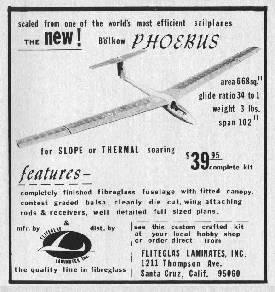
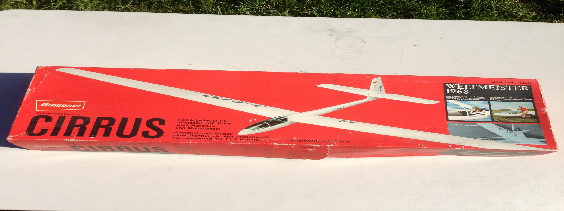
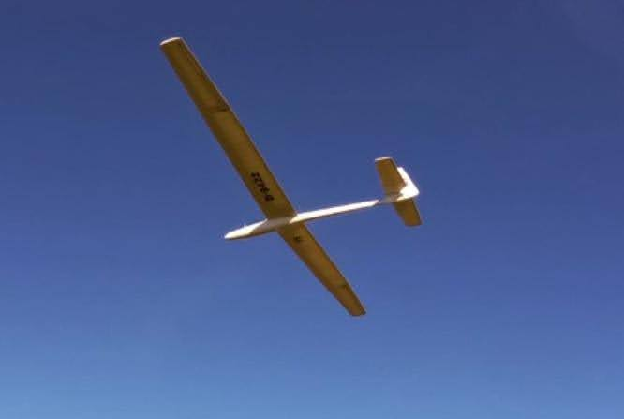
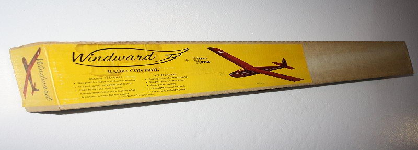
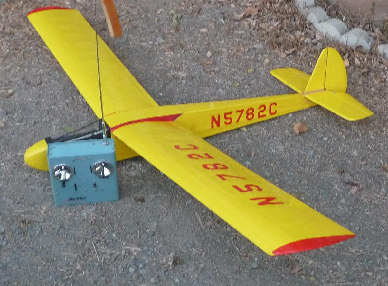
The aircraft used at the time were generally either wood or foam, and mostly heavy and not all that well designed, until the kits of the early 70s started to arrive and really elevated performance. Kelly and Jim started out on a Fliteglas Phoebus, but soon graduated to a Graupner Cirrus, Mark’s Models Windward, and a large Nelson Ka-6, a scale model sailplane.
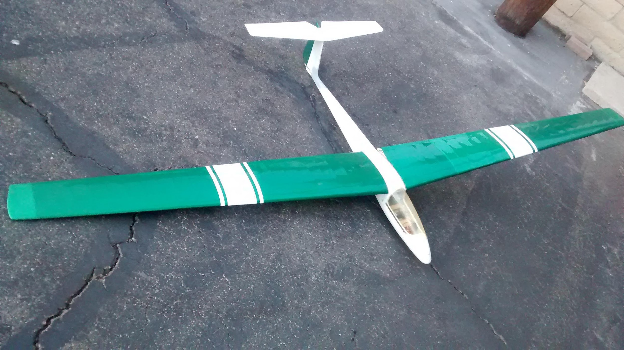
At the same time, RC soaring clubs were forming elsewhere such as the Harbor Slope Soaring Society (HSSS) in Orange County. HSSS used to have contests, mainly thermal contests at Estancia High School. Kelly and others from TPG would leave early to help pitch in to set up the winches, etc. And through these contests Kelly met many RC soaring greats such as Mark and Rod Smith and others. The Smiths were also thermal soaring at Vista, in north county San Diego, and so rather quickly in the early 1970s, TPG expanded to being both a slope and thermal club, and the early experience of TPG members at the slope paid off with exceptional skill in thermal duration contests. Kelly was routinely at or near the top of the pack. Once members became proficient at slope soaring at Torrey there was a natural tendency to ask “what’s next?” and for most, thermal soaring was it. In addition as people started transitioning out of the club there was a question of how to successfully transition the club officer positions to new people, but in the end this was achieved and the core group who started the club rested assured that what they had started would last for a long time.
Kelly continued his education at San Diego State University, graduating in 1974 with a Bachelor’s in Industrial Technology. Directly after graduation, he took a position with Hobie Alter to help sell Hobie Hawks on the east coast. From 1975-to spring 1976 he traveled from contest to contest, flying and selling Hobie Hawks and generally bringing that “west coast” level of fun and competitive prowess to people on the east coast who were just getting into the sport. Those familiar with the promotional film made for the Hobie Hawk will recognize Kelly as the pilot at locations like Torrey Pines and Kate Sessions Park.
The video can be found here https://youtu.be/zk8DqLbKWMo but without sound. The promotional video starts at 3:34, Kelly shows up in the video at 5:20, and Torrey Pines at 6:21.
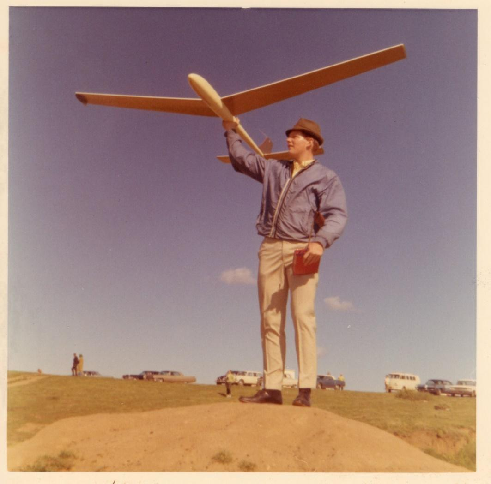
After spring 1976, he continued to work at the Hobie factory in Dana Point, on Hobie Cats. This changed his life passion from soaring to sailing and he has continued with sailing as a profession and hobby for many decades as a long-standing member of the Half Moon Bay Yacht Club (HMBYC). He served as President of the HMBYC Foundation, a group dedicated to help underserved youth find the enjoyment of sailing including programs with autistic kids.
Kelly continues to credit his father, Torrey Pines, and the TPG with his life-long passion for science and technology, education, and the ability to connect with others quickly as a leader. For his many efforts in the initial formation of the Torrey Pines Gulls and service as its first president, he was awarded Modeler of the Year in 1973. Kelly and Jim would routinely offer any spectator at Torrey the opportunity to try their hand at soaring and this led to many new members. In many ways he embodied the foundation and spirit of the Torrey Pines Gulls.