 Welcome to Torrey Pines Gulls
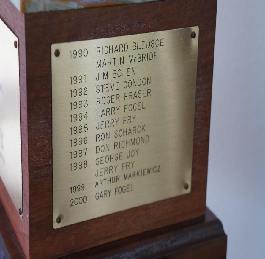
Larry Fogel – Modeler of the Year – 1994
The Torrey Pines Gliderport is a complex environment both in the air and on the ground. It also has a lengthy and important history in the development of gliding as a sport in the United States. The TPG is very fortunate to call it home.
The gliderport property itself is owned by two land owners. The portion of the gliderport closest to the cliff is owned by the City of San Diego and operated as Torrey Pines City Park with a portion of that park leased to a lessee for the purpose of gliding. The other portion of the gliderport, a large dirt area to the east, is owned by the UC Regents and operated by the administration of UC San Diego. Prior to the 1960s, both of these portions were owned by the City of San Diego and operated as a cohesive gliderport. However in the late 1950s the citizens of San Diego deeded half of the gliderport to the UC Regents via a city-wide vote as a part of attracting UC to establish a campus in La Jolla. Of course most citizens did not know at the time that they were deeding away half of the gliderport as the property was described as “Pueblo Lot 1234” followed by various coordinates designating the boundary of what would become UCSD. And while the full-scale glider club (the Associated Glider Clubs of Southern California) went to the City Council prior to the vote to ask that the gliderport not be included as a part of this deed, the City was less than eager to do anything that would negatively affect the very positive outcome of having UCSD established in the region.
After the positive vote, UCSD Chancellor Roger Revelle recognized the unique beauty and importance of the gliderport. He was quoted in the newspapers as suggesting that the gliderport activities should be incorporated into the athletic programs of the university, wanting flying to continue there as a benefit for student learning. For a time there was even an active UCSD Glider Club with their own manned sailplanes, operating together with the Associated Glider Clubs of Southern California at Torrey Pines. This arrangement lasted for more than 20 years.
However in 1989, UCSD produced a Long Range Development Plan. It’s common for UC campuses to do this every 10 years or so as a way of working with the community and staying true to the original vision of the campus. For decades the gliderport was shown as a continued resource for athletics. But the 1989 plan changed this to having the eastern portion of the UC property slated for development while the western portion of the UC property continuing for gliding. This concept would reduce the manned sailplane runway in half with the effect of rendering the runway useless for soaring. Moreover it was a great departure from the previous good community relations to retain gliding for future generations and replaced the gliderport with the possibility of large multistory buildings.
At the time Gary Fogel came to learn about the plan and voiced concern about it to his father Larry. They agreed that someone needed to raise a voice in opposition and they set out to do something about it. They contacted UCSD to learn more and confirmed the plans. They contacted the City and the City basically said there wasn’t much they could do about UC plans as it’s their property not City property. What to do?
Gary learned of a program – the National Soaring Landmark program – offered by the National Soaring Museum. Through this program it was possible to designate soaring sites as being historic to soaring. A stamp of approval that a national organization agreed this place was important might help in our cause. Gary wrote to the National Soaring Museum and was told that Torrey Pines would be great to designate but there was a large proposal process, documentation of the history, a plaque, even as we later learned the need to have specially flown glider mail – mail that would arrive on site via glider as a part of a ceremony if approved. Armed with this knowledge, Larry and Gary agreed that Gary would start boning up on the history and writing the documentation if Larry would carry forth and obtain letters of support. This process took much of 1990-1991.
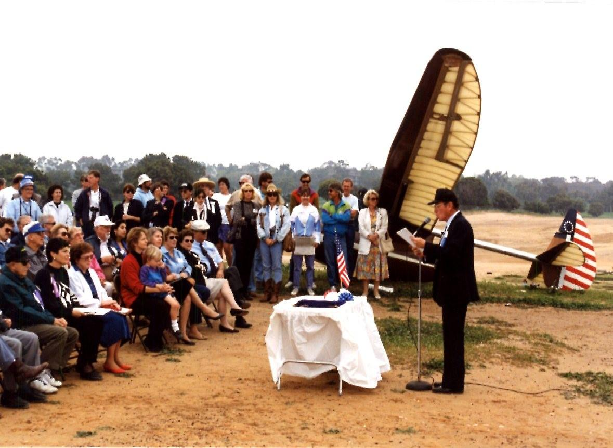
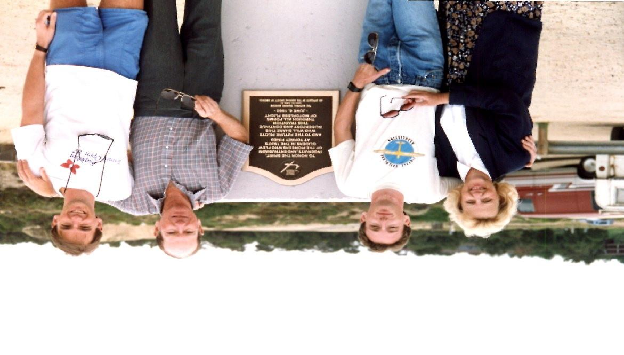
An application package was prepared and soon approved by the NSM. But now the effort really began – all of the organization for a dedication ceremony, speakers, audio equipment, arranging the glider mail, getting word out to early soaring pioneers, the media, ordering a plaque, etc. That was daunting. Larry spearheaded it all and basically as a family operation of Larry, wife Eva, sons Gary and David, it was all pulled together. The entire gliderport (both City and UC properties) was dedicated as National Soaring Landmark No. 5 on June 6, 1992, the first such designation west of the Mississippi. In attendance at the dedication were soaring notables such as Dr. Paul MacCready, Johnny Robinson, Woody Brown (who in the late 1930s was the first to launch and land a sailplane from the top of the cliffs), Bud Perl (who at age 16 had helped Hawley Bowlus train Charles and Anne Lindbergh in gliding at San Diego), and many others. This effort also brought together all four forms of motorless flight – RC, hang gliders, paragliders, and full-scale sailplanes in unison to say with a very loud voice that this place is hallowed ground for soaring. This unification was very heartwarming.
While the National Soaring Landmark status was wonderful, it was largely honorific. By this time, Larry Fogel was on a mission: to use the landmark status as the basis to receive proper recognition and preserve the gliderport for future generations to enjoy. He reached out to the City of San Diego Historical Resources Board to determine what it would take to list the property as a city historic site. We learned a great deal and also befriended the Save Our Heritage Organization (SOHO), a local non-profit whose life mission is the preservation of San Diego’s historic resources. Larry went to meeting after meeting, speaking on behalf of the history of the gliderport, to the City Council, District representatives, Mayor, anyone important in the process. Pulling from an extensive rolodex he received letters of support from aerospace notables such as Burt Rutan, Buzz Aldrin, organizations such as the Smithsonian, and a thick set of letters from soaring pioneers all telling the City of San Diego why the gliderport was so important to preserve. I had the pleasure of helping by pulling together a very detailed chronology on the history of the gliderport which at 205 pages and roughly the thickness of a small phone book, could not be denied by any politician. This effort culminated in 1993 with a vote of the San Diego City Council in favor of historic designation. However, at the meeting UC San Diego Chancellor Atkinson spoke in opposition of the vote as he reminded the City that they have no jurisdiction over state property. The City Council agreed, and their vote was to list the gliderport as historic, but only the city-owned portion. Once again Larry arranged for a dedication ceremony at the gliderport, this time with politicians providing speeches. While the first ceremony felt like a reunion of long-time soaring friends at Torrey Pines, the second ceremony felt very much like another step in the right direction but lacking as it didn’t preserve the entire gliderport. The gliderport was officially added to the City Historic Site register as site #315 on August 26, 1992.
After this, the Fogels circled the wagons, as getting the entire gliderport listed as historic at the state and federal level was going to take considerable effort and it was clear that UC San Diego would stand in direct opposition. This was, of course, a very different attitude than Chancellor Revelle’s kind appreciation of the resource from the inception of UC San Diego. But Larry and the Fogels were on a mission and not much was going to stop them from at least trying.
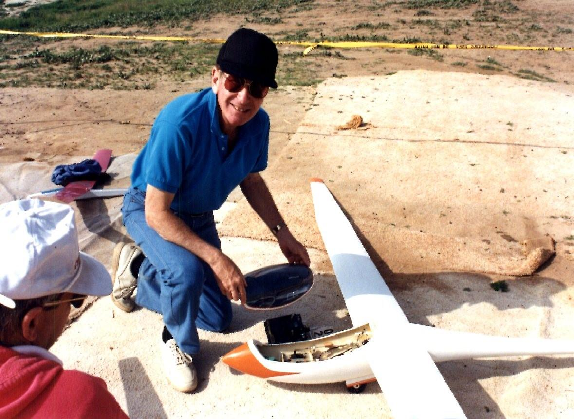
Preparing documentation for an official proposal to the State Office of Historic Preservation is considerable effort, but these were prepared with the expert help of Vonn Marie May, Bruce Coons, and others from SOHO. Their guidance was reassuring as wrong steps could easily derail everything. The battle began taking shape in the local press between UCSD and glider preservation advocates. This effort culminated at a hearing in Riverside in front of the State Historic Resources Board who had come down from Sacramento. On one side were glider advocates led by Larry Fogel with star witness and glider pioneer Bud Perl and others present. On the other side were UC San Diego administrators largely represented by Milton Phegley of the UCSD Real Estate Development Office. Passionate arguments for and against the nomination were heard. And of course, there was a lot of pressure on this state agency to adhere to the wishes of another state body (UCSD). However, in the end, the State Historic Resources Board voted to approve the entire site as historic at the state level, making it official on May 24, 1993. A huge win for all glider fans! We had a nice celebratory dinner that evening. And we were tired.
However, “Larry the Energizer bunny” wasn’t finished. Given the nomination to the State was based on the importance of the gliderport to the nation, any state property approved with that importance automatically moves to consideration at the Federal level with the National Register of Historic Places. It was critical that the documentation to prove state-level importance would also prove national-level importance. That documentation worked. The entire gliderport was listed at the Federal level in 1993.
As things weren’t already crazy enough, that same year Larry, Eva, and son David formed a new computer science company Natural Selection, Inc. with offices not far from the gliderport. Larry specifically chose the location so he could have a 5 min drive to fly at the gliderport at lunch on weekdays.
Despite the effort and successes, the gliderport remains under continual threat of development. Designation on the National Register does not truly preclude UC San Diego from building on the property – but if they choose to do so, they must make accommodations for maintaining use of the site for gliding. For instance, the Sanford Burnham Stem Cell Research facility at the east end of the gliderport is actually within the boundary of the National Registered property, and went through another protracted battle before its construction. But as a condition of that building, UC San Diego had to agree to runway realignment and allowing continued access for manned sailplane operations.
Similarly, more recently the US Navy expressed interest in removing the historic Navy Tower which has been used by glider pilots since the 1930s as an indirect altitude indicator of when it’s time to land. Upon learning of the tower’s association with the National Register property, the Navy dropped its plans.
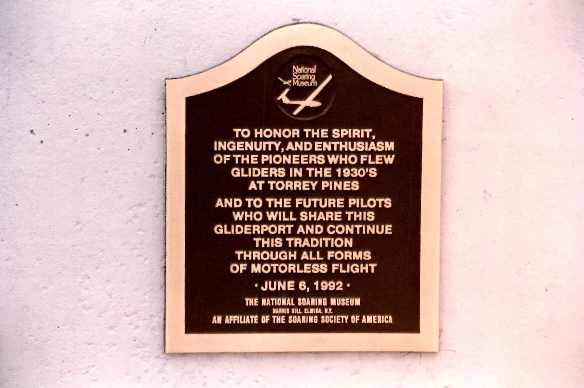
*|caption: The National Soaring Landmark plaque installed on a concrete stanchion from the former U.S. Army Camp Callan base at Torrey Pines. The City of San Diego Historic Site plaque also resides below this marker but was installed a year later. To date no markers for the
State or National Register listing are at the site.|*
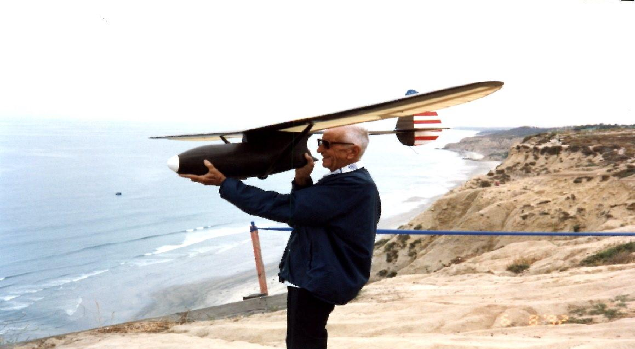
But back in 1994, after the series of successful campaigns to preserve the gliderport for all forms of motorless flight, the TPG awarded the Modeler of the Year trophy to Larry Fogel. As such he became the first modeler to repeat as a TPG Modeler of the Year awardee.
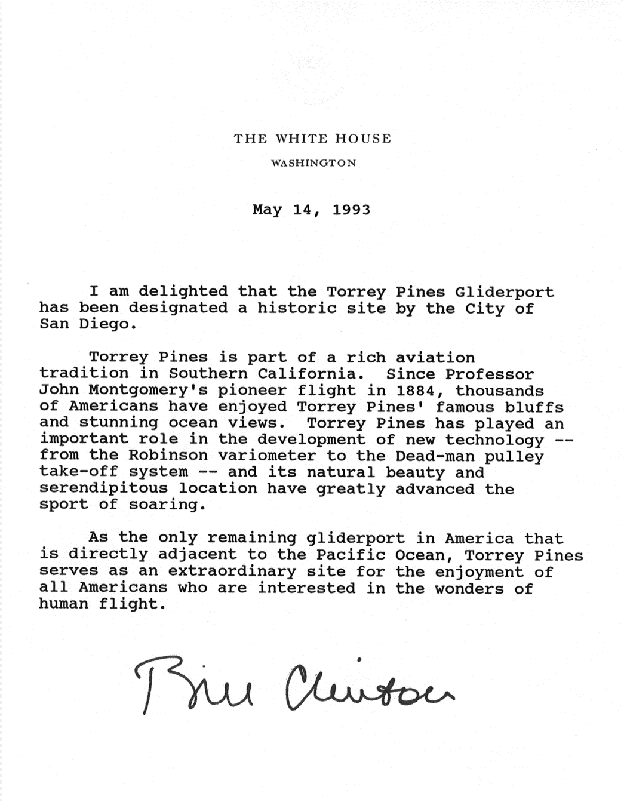
*|caption: Throughout the process Larry Fogel secured letter after letter in favor of
preserving Torrey Pines for silent flight. This letter from President Bill Clinton was
among them.|*