 Welcome to Torrey Pines Gulls
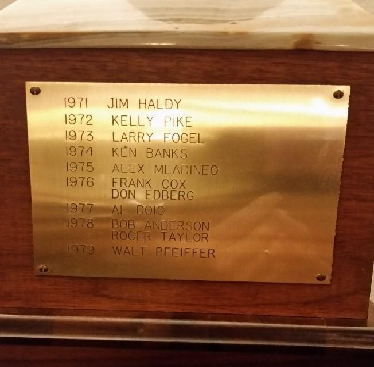
Walt Pfeiffer – Modeler of the Year - 1979
In the early years of the TPG in the 1970s, there were generally two age groups of members; seasoned veterans of technology willing to help newcomers, and many young newcomers eager to get into RC but with no idea how to actually do it. Walt Pfeiffer was one of the veterans who selflessly provided his time to help newbies enter the hobby and become active in the Gulls.
Walt started flying rubber-band and gas-powered free-flight model airplanes as a youngster in 1935. He kept flying models until the late 1940s. In the late 1940s Walt attended the California Institute of Technology (Caltech) and graduated with a Bachelor of Science degree in physics. From there he enlisted in the US Air Force and received a Master’s degree in nuclear engineering from the Air Force Institute of Technology at Wright Patterson AFB in Dayton, Ohio in 1951. In 1959 he completed an additional 2 years of schooling in nuclear engineering at the University of Maryland in Baltimore.
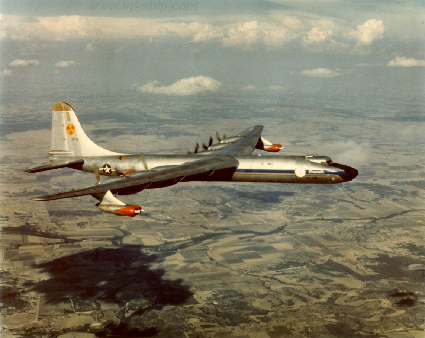
Shortly after the conclusion of WWII, the US Army Air Force had initiated the Nuclear Energy for the Propulsion of Aircraft (NEPA) project, which was replaced by the Aircraft Nuclear Propulsion (ANP) program in 1951. These projects were to modify existing aircraft, mainly Convair B-36 Peacemakers, with airborne nuclear power plants. One B-36 was produced with sufficient shielding to protect the pilots from the nuclear reactor in the bomb bay. The shielding behind the cockpit was a 12-ton combination of lead and rubber. (As Al Doig would say, “Howsat for nose weight?”) 47 test flights were made, with 89 hours of flight time with the reactor on, but just testing the feasibility of the system as the reactor actually never did power the aircraft. Why is all of this relevant to Walt Pfeiffer? One early TPG newsletter noted that Walt held an “Air Force Nuclear Reactor license,” and this was the only program at the time that would have required such a license. The ANP program was terminated in 1961 by President Kennedy. And during Walt’s 21 years of service with the US Air Force, he was a navigator, and radar bombardier mainly on B-29 and B-47 aircraft. He retired with the rank of Lt. Colonel.
After his retirement, Walt moved to San Diego, in what would have been about 1969 or 1970. Walt rather quickly became captivated again by model airplanes and began flying slope RC with the Gulls at Torrey Pines. In that first formal year of the club’s existence, he served as the inaugural club Treasurer.
By the mid-1970s Walt was flying both slope and thermal with the club. He really took well to thermal duration and at one SC2 (Southern California Soaring Clubs)
https://www.rcgroups.com/forums/showthread.php?3012166-SC2-2018-Southern-California-Soaring-Clubs-Official-Thread) contest in September, 1977 he placed second out of 60 pilots.
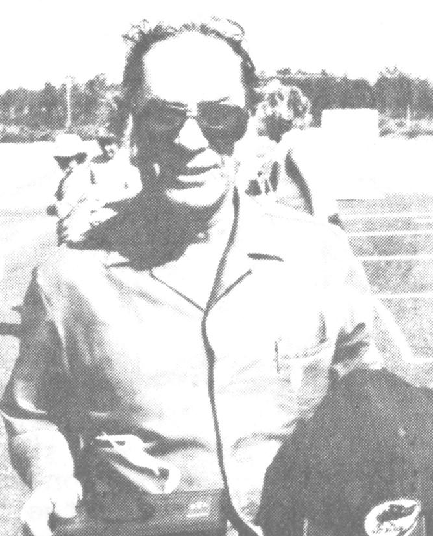
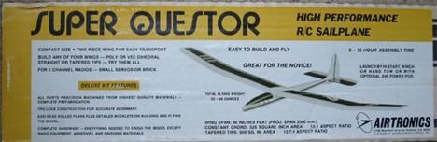
Like most everyone else at that time, he was flying an Airtronics Aquila, but sometimes in club thermal duration events he relied on a tried-and-true Airtronics Super Questor. LSF Number 112, he made it to SAP Level IV in 1977 but never completed Level V. Because of all of his assistance to other Gulls members and to the club as a whole throughout the 1970s, Walt was awarded with the Modeler of the Year Trophy in 1979.